

Medical Assisting Career Guide
Medical Assisting Career Guide
Medical Assistants play a vital role in the healthcare system serving as invaluable members of healthcare teams. They contribute to the smooth functioning of medical facilities by performing a wide range of tasks.
- Medical Assistants perform various clinical tasks to support patient care. Their clinical responsibilities contribute directly to patient care and aid in the diagnosis, treatment, and monitoring of patients.
- Medical Assistants handle various administrative duties in healthcare settings. By efficiently managing administrative tasks, Medical Assistants help ensure overall efficiency and organization of healthcare facilities.
- Medical Assistants play a crucial role in patient education and support. By delivering clear and accurate instructions, Medical Assistants empower patients to take an active role in their own healthcare and improve their overall well-being.
- Medical Assistants often serve as a bridge between patients, healthcare providers, and other healthcare professionals. Their coordination efforts contribute to improved patient experiences and comprehensive healthcare delivery.
The importance of Medical Assistants’ contributions cannot be overstated. Their multifaceted role helps healthcare teams operate efficiently, providing quality patient care and enhancing overall healthcare delivery. Their clinical skills, administrative proficiency, and patient interactions are essential components in delivering comprehensive and compassionate care to individuals and communities. Medical Assistants are invaluable team members who support the healthcare system by facilitating effective communication, ensuring accurate documentation, and assisting in providing optimal care to patients.
Clinical Medical Assistants
- Take and record patient vital signs, such as blood pressure, temperature, pulse, and respiration rate.
- Assist with patient examinations and procedures, including prepare and sterilize medical instruments and equipment.
- Collect and prepare specimens for laboratory testing, such as blood or urine samples.
- Administer medications as directed by healthcare providers and document medication administration.
- Perform basic laboratory tests, such as urinalysis or glucose testing.
- Conduct electrocardiograms (ECGs) and prepare reports for interpretation by healthcare providers.
- Assist with minor surgical procedures, including wound care and suture removal.
- Provide patient education on self-care, medication instructions, and post-procedure care.
Administrative Medical Assistants
- Greet and check in patients, verify patient information, and update patient demographics.
- Manage phone calls, schedule appointments, and handle patient inquiries.
- Handle insurance forms, billing, and coding procedures for reimbursement purposes.
- Maintain and organize patient files, medical records, and other administrative documents.
- Assist in medical office management tasks, such as inventory management and ordering supplies.
- Transcribe medical reports, correspondence, and other clinical documentation.
- Coordinate referrals to specialists and other healthcare providers.
- Assist with insurance pre-authorizations and processing claims.
- Collaborate with other healthcare professionals to ensure efficient patient care coordination.
- Update and maintain electronic health records (EHRs) accurately and securely.
 Medical assistants contribute to patient safety by ensuring accurate documentation, verifying patient identities, and maintaining a safe and clean environment.
 Medical assistants handle patient information and electronic health records (EHRs) with discretion and adhere to legal and ethical requirements, such as the Health Insurance Portability and Accountability Act (HIPAA).
 Medical assistants are responsible for implementing infection control practices to prevent the spread of infections by adhering to precautions, such as hand hygiene, proper use of personal protective equipment (PPE), and maintaining a clean and sterile environment.
 Medical assistants uphold medical ethics by maintaining a high standard of professionalism, integrity, and ethical conduct. They demonstrate respect for patient autonomy, dignity, and confidentiality. Medical assistants follow ethical guidelines when handling sensitive issues, maintaining professional boundaries, and ensuring non-discriminatory and unbiased care for all patients.
 Medical assistants provide information to patients regarding their conditions, treatments, medications, and preventive care. Medical assistants may assist in explaining medical procedures, demonstrating the use of medical devices, and providing resources to help patients make informed decisions about their health.
According to the Bureau of Labor Statistics, a degree is not a requirement to be hired as a Medical Assistant, but many employers in the healthcare industry prefer or require candidates with related certifications to show proficiency and dedication to the field.
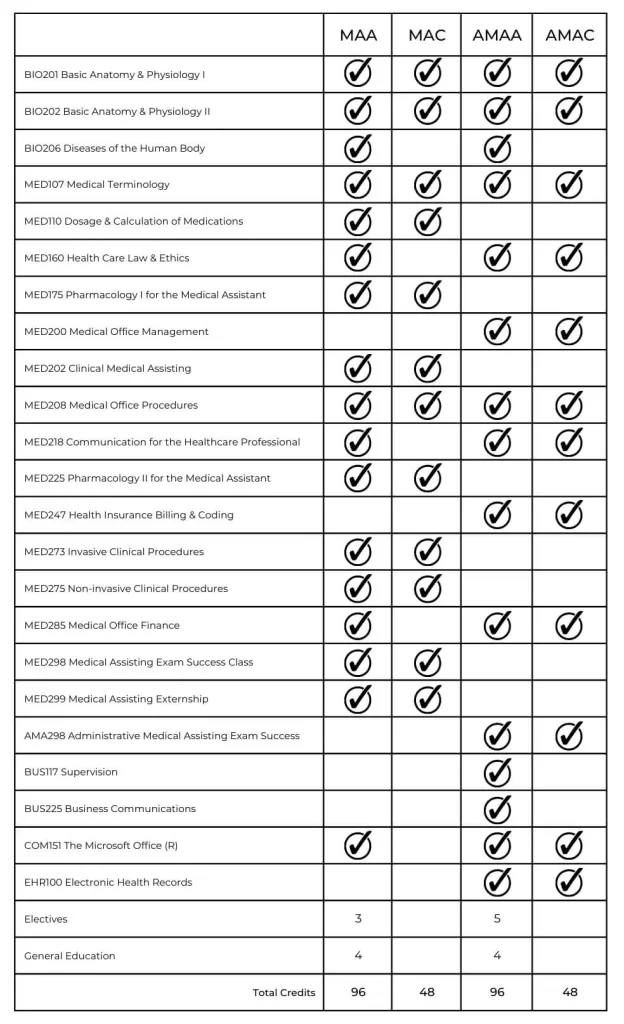
ANU’s Associate degree programs in Medical Assisting and Administrative Medical Assisting prepare students to sit for the Clinical Medical Assistant Certification (CMAC) exam or the Medical Administrative Assistant Certification (MAAC) exam both offered through the American Medical Certification Association. The benefit of an Associate degree program is that college credit can be applied to future degrees at ANU or any other university as transfer credits.
The CMAC and MAAC certifications are widely recognized in the healthcare industry, including medical offices, hospitals, clinics, and other healthcare settings. Holding one of these certifications shows an individual’s dedication to their profession and their commitment to maintaining the highest standards in medical administration.
ANU prepares students to sit for these exams as part of their regular coursework:
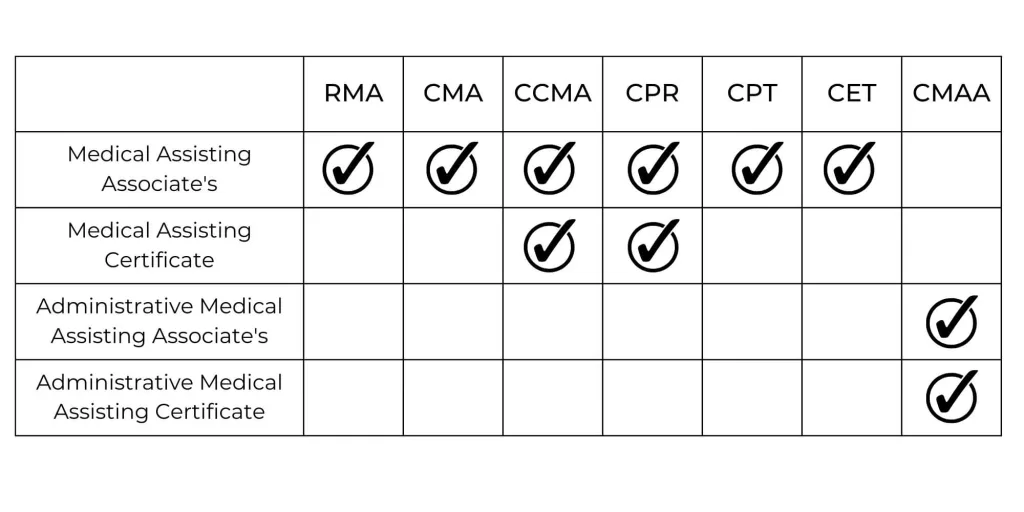
Certificate programs are available in Medical Assisting and Administrative Medical Assisting for healthcare professionals who already have an associate or bachelor degree and want to obtain or refresh their skills in medical assisting.
Your coursework includes hands-on medical assistant training to develop the skills you need:
- You will complete a foundational set of online medical assistant courses in anatomy, pharmacology, physiology, and phlebotomy.
- Medical assistant training to cover areas such as taking patients’ vital signs, collecting laboratory specimens, performing routine tests such as electrocardiography (EKG), and administering therapeutic injections and vaccinations.
- In clinical medical assisting programs, there is a clinical externship of 162 hours of real-world work experience to include caring for patients one-on-one and performing medical procedures at participating locations across the country.
ANU’s Medical Assisting program is an online medical assistant program that includes at-home labs. You will participate in clinical laboratory classes using our at-home lab kits to apply the knowledge you have learned in the classroom and build real-world skills today’s employers require. Laboratory classes are conducted through video conferencing under the watchful eye of your instructor.
Lab kit contents may include:
- Vital sign kit
- Anatomically correct venipuncture arm
- Phlebotomy supplies
- Skeleton model
- Specimen Testing
- Dissection of animal organs
Our hands-on medical assistant training will give you the experience and confidence to succeed in your externship and future career.

Administrative Skills
Medical assistants also need strong administrative skills to manage the front office operations and ensure smooth workflow.
Clinical Skills
Medical assistants need to possess a range of clinical skills to provide direct patient care.

Technical Skills
Medical assistants should be familiar with using various medical equipment and technology.

Interpersonal & Professional Skills
Successful medical assistants exhibit strong interpersonal and professional qualities, including:
- Compassion & Empathy: Demonstrating empathy and compassion while interacating with patients and their families.
- Professionalism: Maintaining a high level of professionalism, integrity, and ethical conduct in all interactions.
- Time Management: Effective time management and organization skills to prioritize tasks and meet deadlines.
- Teamwork & Collaboration: Ability to work collaboratively with healthcare providers, colleagues, and other team members.
- Adaptability & Flexibility: Being adaptable to changes in healthcare environments and the ability to handle diverse patient populations.
- Communication: Communicate effectively to patients and co-workers.
BLS.gov projects the job outlook for Medical Assistants to grow 16% from 2021 – 2031.*
Certified Medical Assistants (CMAs) have a variety of career opportunities within the healthcare industry. Some of the potential career paths for CMAs include:
- Medical Assistant
- Clinical Coordinator / Patient Care Coordinator
- Administrative Assistant / Administrative Medical Assistant
- Medical Office Manager
- Specialty Practice Assistant
- Urgent Care or Emergency Room Technician
- Medical Scribe
- Medical Research Assistant
- Medical Receptionist
- Patient Relations Specialist / Patient Services Representative
- Medical Records Assistant
Possible work settings for a Medical Assistant include:
- Physician’s office
- Hospitals
- Urgent Care Centers
- Specialty Clinics
- Nursing Homes
- Ambulatory Care Centers
- Medical Laboratories
- Community Health Centers
*Cited projections may not reflect local economic fluctuations and do not guarantee job placement.
Specializations
As medical assistants gain experience and identify areas of interest, they may choose to specialize in a specific field of medicine. Specializations can include dermatology, cardiology, orthopedics, pediatrics, or any other area that aligns with their career goals. Specialization may require additional training or certifications, such as becoming a Dermatology Medical Assistant or Cardiology Medical Assistant.
Lead or Senior Medical Assistant
With experience and demonstrated competence, medical assistants can advance to lead or senior positions. In these roles, they may take on additional responsibilities such as training and supervising new medical assistants, coordinating workflow, and assisting with administrative or clinical management tasks.
Office Manager or Administrative Supervisor
Some medical assistants with strong administrative skills and leadership qualities may transition into office manager or administrative supervisor roles. In these positions, they oversee the day-to-day operations of a medical office or clinic, manage staff, handle financial and administrative tasks, and ensure efficient workflow.
Clinical or Administrative Educator
Medical assistants who have a passion for teaching and mentoring others may choose to pursue careers as clinical or administrative educators. They can share their expertise by training aspiring medical assistants, conducting workshops, or working in educational institutions.
Transition to Nursing
Our hands-on medical assistant training will give you the experience and confidence to succeed in your externship and future career and choose the path that works best for you. Upon graduation from a nursing program, you will need to pass the National Council Licensure Examination for Registered Nurses (NCLEX-RN) to become a licensed registered nurse (RN). ANU offers an Associate degree program in Nursing that prepares students for the NCLEX exam.
American Association of Medical Assistants (AAMA): The AAMA is a leading professional organization for medical assistants. They offer resources, continuing education opportunities, networking events, and certification information.
National Healthcareer Association (NHA): The NHA provides certifications and resources for allied healthcare professionals, including medical assistants. They offer study materials, practice exams, and career resources.
American Medical Technologists (AMT): AMT offers certifications, educational resources, and professional development opportunities for medical assistants. Their website provides access to publications, webinars, and networking events.
Medical Group Management Association (MGMA): MGMA supports healthcare professionals, including medical assistants, in practice management and career advancement. They offer education, resources, and networking opportunities.
Association for Healthcare Administrative Professionals (AHCAP): AHCAP is a professional organization specifically for healthcare administrative professionals, including medical assistants. They offer resources, educational opportunities, and a network of peers.
American Medical Certification Association (AMCA): The American Medical Certification Association (AMCA) was established with the vision of enhancing the allied healthcare industry by providing national certification exams that validate the knowledge and expertise of professionals in this field.
LinkedIn Groups: Join relevant LinkedIn groups for medical assistants and allied healthcare professionals. Engage in discussions, share insights, and connect with professionals in your field. Search for groups such as “Medical Assistants Network” or “Allied Healthcare Professionals.”
Journals and Publications: Subscribe to medical journals and publications to stay informed about the latest research, healthcare news, and industry advancements. Examples include the Journal of the American Medical Association (JAMA) or Journal of Medical Practice Management.
Local and Regional Medical Assistant Associations: Explore local or regional associations dedicated to medical assistants. They often provide networking events, educational opportunities, and career resources specific to your area. Search online or inquire with local healthcare organizations.
Conferences and Events: Attend conferences, workshops, and seminars related to medical assisting. These events offer opportunities to learn from industry experts, network with peers, and stay updated on the latest developments in the field.